When researching yoga teacher training programs, many aspiring teachers focus primarily on the physical practice—the asanas, sequencing, and hands-on adjustments. While these elements are undeniably important, a truly comprehensive yoga teacher training extends far beyond the mat. Understanding the curriculum depth of anatomy, philosophy, Ayurveda, and teaching methodology is essential for choosing a program that will prepare you not just to lead poses, but to become a knowledgeable, confident, and well-rounded yoga teacher.

The Foundation: Why Depth Matters
Yoga is a holistic practice with roots stretching back thousands of years. The physical postures we associate with modern yoga represent just one branch of a much larger tree. A quality teacher training program recognizes this and dedicates substantial time to the theoretical, philosophical, and therapeutic aspects of yoga alongside the physical practice.
Students who graduate from programs with curriculum depth report feeling more prepared to handle diverse student needs, answer complex questions about yoga's origins and purpose, and adapt their teaching to different populations. This comprehensive foundation is what transforms a yoga practitioner into a yoga teacher.
Anatomy and Physiology: Understanding the Body in Motion
Typical Time Allocation: 20-30 hours
A robust anatomy component goes beyond memorizing muscle names. Quality programs dedicate significant time to helping you understand:
Functional Anatomy: How the body moves through yoga poses, which muscles are engaged, and why certain alignment cues matter. You'll learn to identify the primary movers, stabilizers, and antagonists in each major asana category.
Applied Biomechanics: Understanding joint actions, range of motion, and how individual body variations affect practice. This knowledge helps you recognize that not every body can or should achieve the same shape in a pose.
Systems Integration: How the practice affects the nervous, respiratory, cardiovascular, and endocrine systems. This creates a foundation for understanding yoga's therapeutic benefits beyond flexibility and strength.
Common Injuries and Contraindications: Recognizing potential risk factors and understanding which modifications serve which conditions ensures you can teach safely and inclusively.
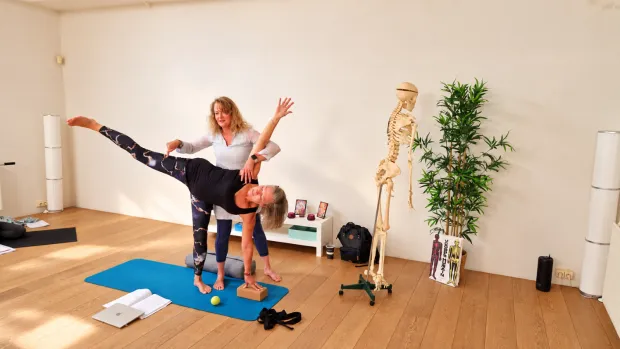
Programs with strong anatomy curricula often include visual learning tools, movement labs where you practice palpating anatomical landmarks, and case studies that bridge theory with practical teaching scenarios.
Yoga Philosophy: The Sutras and Beyond
Typical Time Allocation: 20-40 hours
The Yoga Sutras of Patanjali form the philosophical backbone of classical yoga, but comprehensive programs contextualize this text within the broader landscape of yogic thought.
Deep Dives into Key Texts: Beyond surface-level readings, quality programs facilitate discussions on the Yoga Sutras, exploring concepts like the eight limbs of yoga, the nature of consciousness (chitta), obstacles to practice (kleshas), and the path to liberation (kaivalya).
The Bhagavad Gita: Many programs include study of this sacred dialogue, examining its teachings on dharma, karma, devotion, and the different paths of yoga (bhakti, jnana, karma yoga).
Historical Context: Understanding how yoga philosophy evolved from Vedic traditions through the medieval Hatha Yoga texts to modern interpretations helps teachers communicate yoga's relevance across time periods.
Practical Application: The strongest philosophy sections connect ancient wisdom to contemporary life. How do the yamas and niyamas (ethical guidelines) inform how we teach? How can understanding the koshas (layers of being) help students connect more deeply with practice?
Programs that dedicate substantial time to philosophy create teachers who can speak intelligently about yoga's purpose beyond physical fitness and help students discover the transformative potential of the practice.
Ayurveda: Sister Science of Yoga
Typical Time Allocation: 10-20 hours
Ayurveda, India's traditional system of medicine, shares philosophical roots with yoga. Including Ayurveda in teacher training enriches your understanding of holistic health and individualized practice.
The Doshas: Learning about the three primary constitutions (vata, pitta, kapha) and how imbalances manifest helps you recognize patterns in students and suggest appropriate modifications.
Seasonal and Lifestyle Practices: Understanding how time of day, season, and life stage affect energy and needs allows you to create more intentionally sequenced classes.
Diet and Digestion: While teacher training doesn't make you a nutritionist, basic Ayurvedic principles about food, digestion, and eating habits complement yoga practice and self-care.
Practical Integration: The best Ayurveda components help you identify your own constitution and imbalances, then explore how to adapt practice accordingly. This personal exploration translates into more nuanced teaching.
Teaching Methodology: The Art and Science of Instruction
Typical Time Allocation: 30-50 hours
This is where everything converges. Teaching methodology transforms your personal practice and theoretical knowledge into effective instruction.
Class Sequencing: Learning intelligent, purposeful sequencing that honors warm-up, peak poses, cool-down, and energetic arc. You'll understand why poses are ordered in specific ways and how to create balanced, safe classes.
Language and Cueing: Developing clear, concise, anatomically informed verbal cues. This includes learning the difference between directional, anatomical, and metaphorical language and when each serves students best.
Demonstration and Adjustment: When and how to demonstrate poses effectively. Learning hands-on assists with attention to consent, safety, and alternatives to touch.
Observation Skills: Training your eye to see what's happening in students' bodies and recognize when someone needs modification, encouragement, or challenge.
Voice and Presence: Cultivating the confidence, authenticity, and authority that effective teaching requires. This often includes practice teaching sessions with feedback.
Class Management: Practical skills like timing, handling difficult situations, creating inclusive environments, and managing diverse skill levels in one class.
Business Basics: Many programs now include introductions to marketing, liability, insurance, ethics, and scope of practice.
The teaching methodology component typically involves the most hands-on practice. You'll teach portions of classes to your peers, receive constructive feedback, and progressively build toward teaching full classes.
The Balance: What Does a Well-Rounded Curriculum Look Like?
In a standard 200-hour teacher training, a comprehensive curriculum might break down approximately as follows:
- Asana Practice: 75-90 hours (including personal practice, learning alignment, and exploring variations)
- Teaching Methodology: 30-50 hours (including practice teaching) 30-50 hours (including practice teaching)
- Anatomy and Physiology: 20-30 hours
- Yoga Philosophy: 20-40 hours
- Ayurveda and Lifestyle: 10-20 hours
- Practicum: 10-20 hours (teaching real classes outside of training)
- Meditation and Pranayama: 10-15 hours
These allocations vary by program philosophy, but the key indicator of curriculum depth is that no single area dominates to the exclusion of others. Physical practice should be substantial but not comprise 70-80% of your training.
Questions to Ask Prospective Programs
When evaluating teacher training curricula, consider asking:
- How many contact hours are dedicated to each subject area?
- Who teaches each component? Are they qualified specialists or is one person teaching everything?
- What texts and resources are included in the curriculum?
- How is philosophy made relevant and applicable rather than purely academic?
- Does anatomy instruction include hands-on learning and application?
- How much actual teaching practice will I complete during the training?
- Are there written assessments, practical exams, or both?
- What preparation or homework is expected between training sessions?
The Long-Term Impact
Teachers who graduate from programs with substantial curriculum depth consistently report greater professional confidence and longevity in teaching. They're better equipped to:
- Teach specialized populations (seniors, prenatal, therapeutic)
- Pursue advanced certifications with strong foundational knowledge
- Communicate yoga's benefits to medical professionals and institutions
- Create workshop and series offerings beyond drop-in classes
- Continue self-study with the critical thinking skills to evaluate new information
Depth of curriculum doesn't just prepare you for your first teaching job. It establishes a foundation for a lifetime of learning, growth, and evolution as a teacher.
Conclusion
The poses will always be central to yoga practice, but they're not the whole story. A comprehensive teacher training curriculum recognizes that to teach yoga authentically and effectively, you need to understand the body, the philosophy, the lifestyle practices, and the pedagogy that transforms knowledge into skillful teaching.
When choosing a yoga teacher training, look beyond the style of asana taught or the appeal of the location. Examine the curriculum depth carefully. Ask how much time is devoted to each component and who teaches it. Seek programs that honor yoga as a complete system, not just a physical fitness modality.
Your students will ultimately benefit from every hour you spend studying anatomy, every discussion about the Sutras, every exploration of Ayurvedic principles, and every practice teaching session. The depth of your training determines the depth you can offer as a teacher—and that makes all the difference.